Get Your Patio & Driveway Summer Ready: Why Now is the Perfect Time
The barbecue is out, the garden furniture is back on the patio, and the long evenings are here. But if your driveway is still grey and stained from winter, or your patio is covered in green algae from months of damp weather, you're not getting the most out of your outdoor space. Summer is the single best time of year to get your patio and driveway professionally cleaned — and here's why.
Why Summer is the Ideal Time for a Professional Clean
Timing matters more than most people realise when it comes to exterior cleaning. Here's what makes summer the perfect window:
- Fast drying times: Warm, dry weather means your driveway and patio dry quickly after cleaning, so you're not left with a wet surface for days. This is especially important after block paving re-sanding — the kiln-dried sand needs to settle into dry joints.
- Algae and moss are at their weakest: The combination of spring rain and warming temperatures causes a surge in algae and moss growth. By early summer, that growth is at its most visible and most treatable — biocide treatments applied now work faster and last longer in warm conditions.
- You'll actually use it: There's no point having a pristine patio in November. Get it done now and enjoy it all summer — every barbecue, every evening outside, every time guests come over.
- Prevents long-term damage: Moss and algae aren't just unsightly. Left on block paving, they work into the joints and degrade the sand. On natural stone, they hold moisture against the surface and accelerate weathering. Cleaning now prevents structural damage that compounds over time.
☀️ Summer tip: Book your clean early in the season. Demand picks up significantly from June onwards and slots fill quickly — especially for driveways that need re-sanding after cleaning.
What a Professional Driveway Clean Actually Involves
A proper professional driveway clean is very different from hiring a pressure washer from a tool hire shop and blasting it yourself. Here's what we do at PowerJ:
1. Pre-treatment with specialist chemicals
Before any water touches your driveway, we apply a professional-grade chemical treatment tailored to the surface type and the nature of the contamination. For driveways with oil stains, we use a targeted degreaser. For moss and algae, we apply a biocide that breaks down the root system rather than just removing the surface growth.
2. Hot or high-pressure wash
We use commercial-grade pressure washing equipment — significantly more powerful and precise than domestic hire machines. The pressure is calibrated to the surface: higher for concrete, more controlled for block paving and natural stone to avoid disturbing the joints or etching the surface.
3. Re-sanding (block paving)
If you have block paving, the cleaning process inevitably removes some of the kiln-dried sand from the joints. We re-sand the entire surface as part of the job, brushing dry sand into all the joints and compacting it. This is what keeps the blocks stable, prevents weeds from establishing, and gives the finished result that crisp, new-looking appearance.
4. Post-treatment biocide
We finish every job with a biocide application. This kills any remaining spores at a microscopic level and significantly slows the return of moss and algae — typically extending the time before the next clean is needed by 12–18 months.
What About Patios?
Patios present their own challenges depending on the surface material. Here's a quick guide to what's involved for the most common types:
- Concrete slabs: Generally the most straightforward. High-pressure wash with chemical pre-treatment removes most staining, moss, and algae effectively.
- Natural stone (sandstone, limestone, slate): Requires a lower-pressure, more careful approach. Aggressive pressure washing can etch the surface and damage the finish. We use controlled low-pressure washing with pH-neutral cleaners to protect the stone.
- Porcelain: Very durable and relatively easy to clean, but the grout lines need attention. We use specialist grout cleaners to restore the joints without damaging the tile surface.
- Indian sandstone: One of the most popular patio surfaces in the UK and one of the most porous. It stains easily and holds moisture, making it a prime candidate for algae growth. Regular professional cleaning is essential to maintain both appearance and structural integrity.
How Much Does It Cost?
Every job is priced individually because the variables are significant — surface area, surface type, level of contamination, whether re-sanding is required, and how much chemical treatment is needed all affect the final price. As a guide:
- Block paving: on average £4.50 per m² including chemical treatment and re-sanding
- Patio cleaning: on average £3.50 per m² including chemical treatment
The best way to get an accurate figure is a free quote — Jakub will assess the job in person (or from photos) and give you a fixed price with no surprises.
The Before and After Difference
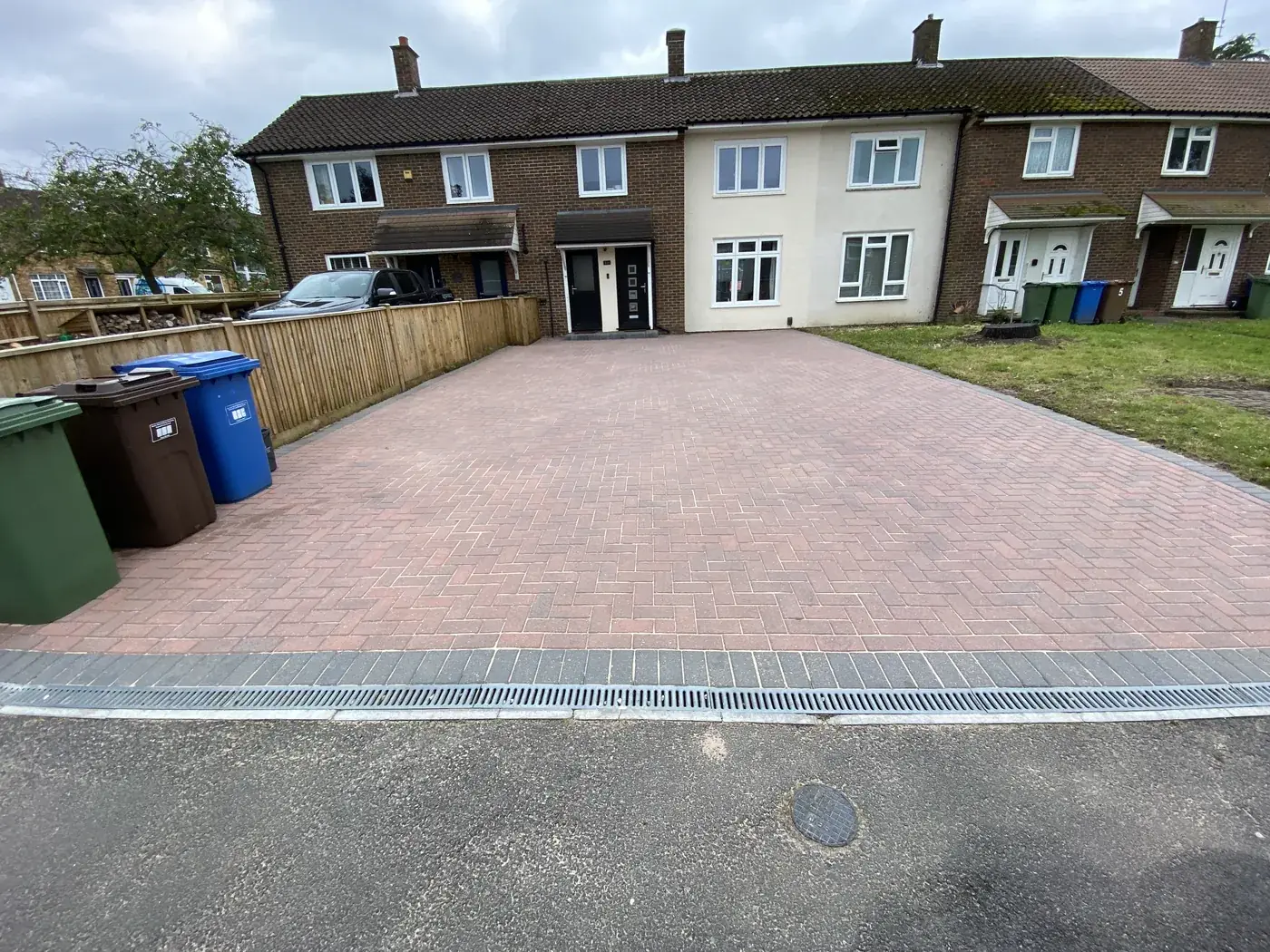
It's difficult to overstate the visual transformation a professional clean delivers. A driveway that's been neglected for a few years typically goes from dark grey-green and stained to a near-original light colour. Block paving that looked permanently dirty comes back to life. A patio covered in algae becomes a surface you actually want to sit on.
It also makes a significant difference to kerb appeal — something that matters whether you're planning to sell or simply want to take pride in your home.
Ready to get your patio or driveway summer ready?
PowerJ Exterior Cleaning covers Bracknell, Wokingham, Ascot, Windsor, Sandhurst, and surrounding areas. Get a free, no-obligation quote from Jakub — most jobs can be booked within 1–2 weeks.